Gluten-Free: An InDesign Magazine

The final project for Publication Design was to put together a 28 page magazine covering a single social issue. Having just been diagnosed with a wheat allergy and knee deep in research as I was first learning how to change my lifestyle, I chose it as my topic.

This was an activity in detail management! InDesign can be cloogy, but by the time I was finished with this project, I was beginning to grasp it’s idiosyncrasies and to work around them.

Click the photo to go to a flip book of the entire magazine:

Content was gathered from the web and credited.

Photos are primarily pulled from Getty Images and Google and are credited as well.

Special mention goes to my beloved friend and the founder of the Greater Philadelphia Celiac Sprue Support Group, Phyllis Brodgen, who fought for years to bring the issues of wheat allergies to a higher visibility on a national level.

NOTE: This project was taken to my second interview with Rotonics. It played a part in my getting hired for next quarter’s internship. Thank you once again to Beth Remsburg for a portfolio worthy project.

NOTE2: I was pleasantly startled to find this magazine was hung on the wall for the following quarter!

Fairy Dust

Our library assignment was to write a report on two digital artists and then emulate one of their processes/styles.

Phil McDarby captured my imagination. He utilizes his own photos as well as painting to create fantasy environments that the child in me wants to visit.

So that is what I did… a lily pad from the zoo and a painting of my niece, Samantha, create this charming fantasy of a fairy whispering into the flower. Who knows what she is saying, but I like to think of her encouraging the blooms, or maybe coaching a lady bug out of hiding.

Lighting and Mood

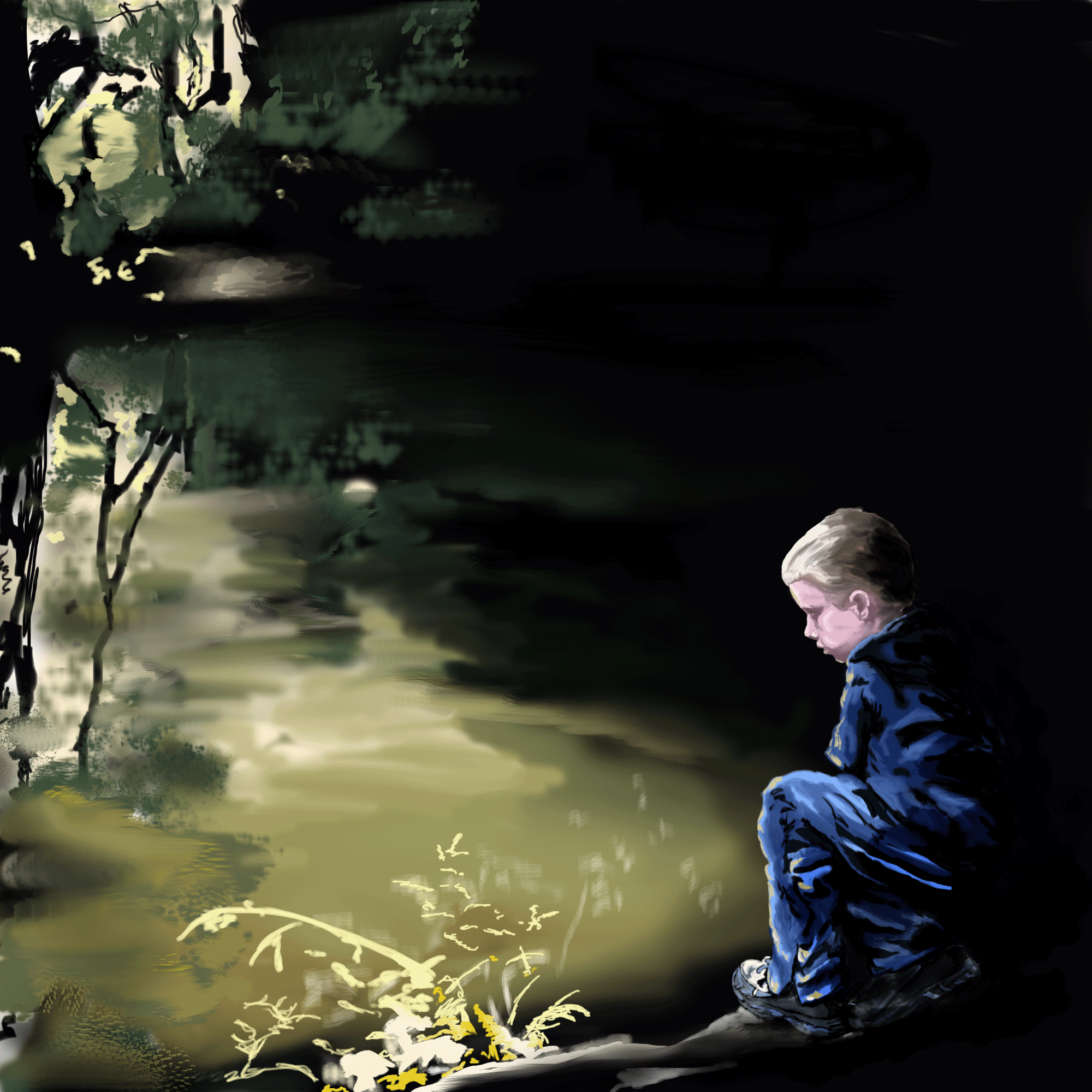
My introduction to the mixer brush in Photoshop CS5 did wonders for my pleasure in digital painting. However, I still prefer my brushes and canvas.

Homework: create a mood utilizing light and multiple reference photos.

First one is of a nephew and the second is of King, my niece and nephews’ cat. (BTW, these look wonderful printed on canvas paper and framed.) Things really clicked for me when I completed King’s eye and it looked real.

Publication: College Viewbook

Publication Design concentrates on organizing information and then placing it within a welcoming design, something I love doing. This particular project focused on a viewbook concept (used for recruiting) for an art college.

I love photos and feel they tell the story much better than words, so I chose The University of Arizona so that I could use many of my own photos. It was like a mini vacation and I thoroughly enjoyed the project.

Specs:

  • Concept for a college viewbook
  • Target audience: high school students and their parents, potential non-traditional students
  • Size 8″x8″
  • Photos mostly by myself
  • Writing comes from the UofA site
  • Created in InDesign CS5

Click the front cover to be taken through a simulation of the actual book.

Matte Painting 1

Computer artist I don’t claim to be. I worked on this and it just got worse and worse. The sunflower was a painting and the landscape was a composite with a photo I took in AZ.

Then I worked on the one below (again a mix of photos and painting) and gave up.  My favorite thing is to paint, but that does not translate over to painting with a computer stylus and Wacom tablet. It is better than using a mouse to paint, but it is not my love.  I am becoming more comfortable with using Photoshop, so am glad I am taking the class.

Type My Heart

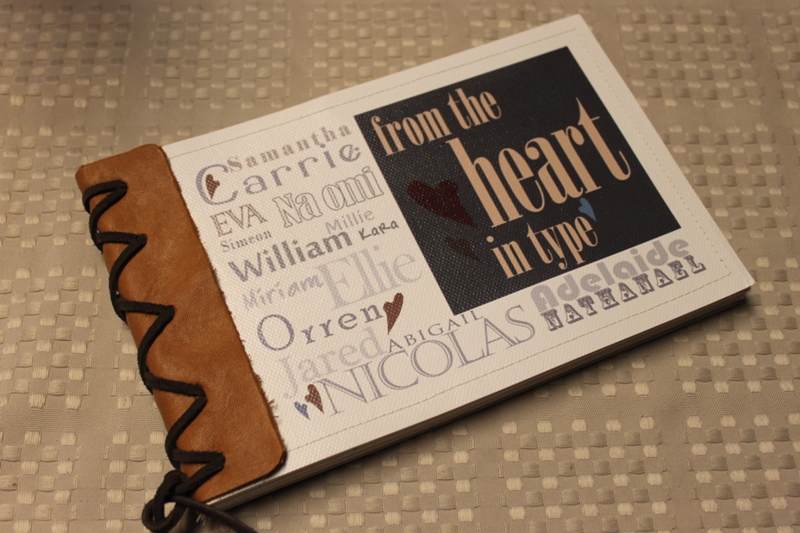
Our Typography final was a 4 week project to create a book. I chose to print mine on one sided canvas paper (meaning I had to sew the pages back-to-back) and to bind it with leather (for durability.) I also sprayed each page with a Krylon protective spray.

This book should be able to endure many, many years of loving hands flipping through it.

Process:

  1. Read the book “10 Commandments of Type”.
  2. Retype the 10 commandments (rules).
  3. Illustrate the rule with typography.
  4. Illustrate how to break the rule.
  5. Put all of this into a book format.

In other words, we were to have 20 typographic illustrations, 2 of which were required content.

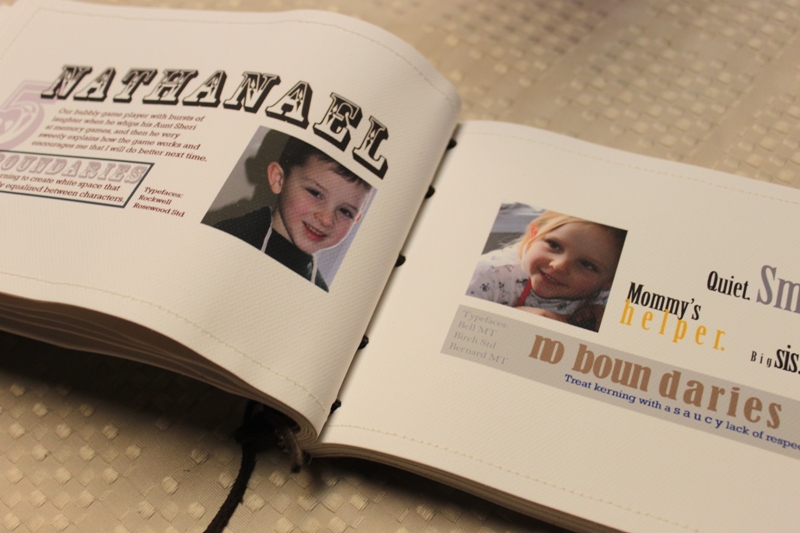
Simple enough, but I was not interested in re-typing a book that did not impress me (I never did read it all.) So I came up with a whole different take on the same concept and turned it into a gift for my mother. Since 20 pages were required and I have 18 nieces and nephews, the subject matter was pretty much a no-brainer. The rules were turned into “Boundaries” and “No Boundaries”, which seemed an appropriate word for kids.

The pages were laid out in a spread format, so each spread (the boundary on the left and the broken boundary on the right) actually went together. Something that is not noticed when each page is read separately in the slideshow below.

The photos are all my own and taken in 2010. The writing is also my own and strives to capture something specific about each child.

During this process, I fell in love with these kids all over again. This has to be my absolute favorite project I have ever done at the Art Institute. How in the world will I ever top it?!

I ended up making two of these. One I turned in to my instructor and the other I gave to Mom as an early Mother’s Day gift. Keeping something like this secret just isn’t in my skill set.

For the entire book and photos of the process:

This slideshow requires JavaScript.

Painting Final

For our 3rd and last painting we were permitted to choose items with color from home. I chose my 1000 year old ancient pottery that I have wanted to paint for years. These are a couple of items I have been restoring and never finished. I sort of like them that way.

1st step was to draw large charcoal drawings from different angles and identifying the values. I chose to go with this setup, which was at my home studio where I had good lighting.

Next, block it out on the canvas with the water soluble oils we were using for class. I could have stopped here. I really liked the colors. The black was made by mixing phthalo blue and burnt sienna, giving it a really funky blue/brown look when creating the grays.

My palette.

We let that layer dry and then the fun part. Putting color onto the canvas. I love painting!

In the classroom lab I chose to arrange them on a table at the back of the room so I had some space around me and could be comfortable. It also meant I did not have any lighting to speak of, but that was fine. This was a truly pleasurable experience.

This final photo was taken on my cell phone because the teacher asked to keep this one and hang it on the wall at school. I am not finished with it yet, but the teacher felt it was done and told me to stop. The details that I want to cleanup and finish will drive me nutty for the next 3 months as I see it hanging there, but overall I like it.

One thing I learned was that I can paint faster than I thought! This process was done over 4 weeks in the classroom, but it took me a couple of weeks just to get used to the setup as well as letting layers dry. The total hours in this project was, at most, 7.